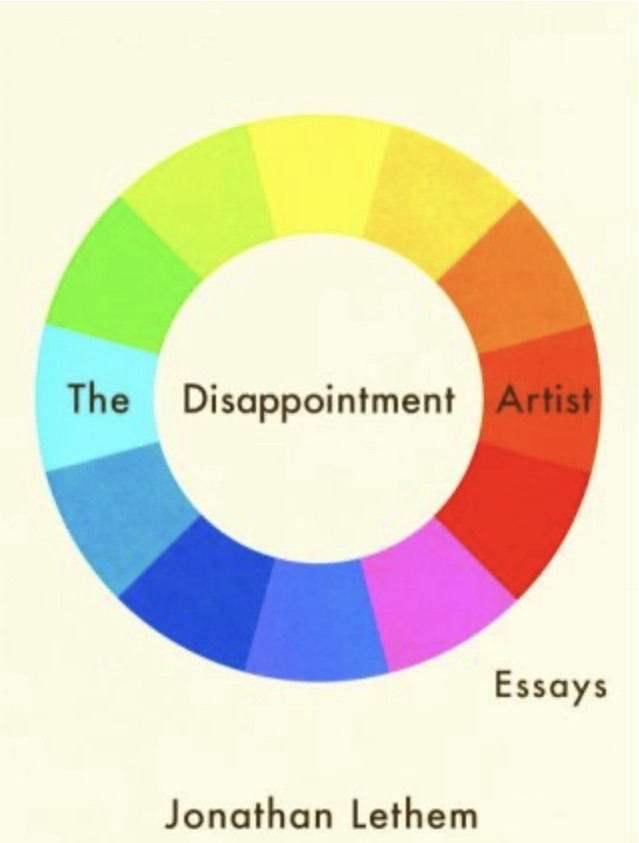
(The Disappointment Artist review)
Jonathan Lethem published his first novel Gun, with Occasional Music in 1994, the year of my birth. This is an irrelevant fact, and yet it holds an appeal for me: that this author has been an active literary force for my whole existence. Of course, timeframe is no indication of appeal, and I had been aware of Lethem ever since finding Motherless Brooklyn on a 100 greatest mysteries and thrillers article on Amazon (it was liberal in its selection, since it also had The Name of the Rose). But I have never felt strongly drawn to his work. The only thing I read by him was the title story from his collection, Lucky Alan, which I recall not being impressed by. Now after reading his first essay collection The Disappointment Artist (2005), I feel compelled to try one of his novels, and I will definitely be putting his other essay collections up on my TBR pile.
The Disappointment Artist has been criticized by some readers for being self-indulgent. To me, that is the book’s biggest strength that carries it forward. Lethem pitches the book as “a series of covert and not-so-covert autobiographical pieces.” Autobiographies, by nature, are self-indulgent. But as a result, they can be in danger of sliding into narcissism, especially if the readers does not share the author’s enthusiasms or outlook. I personally do not care about Marvel comics, Philip K. Dick, The Searchers, or John Cassavetes. But Lethem made me understand his enthusiasms and why they were his enthusiasms. Eventually, I stopped caring what he was talking about, and just began to enjoy hearing him talk about it. The only other writer who has provoked this reaction in me is Roger Ebert; Lethem now joins his company.
Lethem’s secret to winning me over was this: he writes with the passion of a fanboy and the mind of a critic. To quote a review on Goodreads, “Lethem is a fan but not a Fan, and a critic but not a Critic.” He has the devotion of a dedicated fanboy, but observes what they might overlook or refuse to acknowledge; both sides balance each each other out.
This is best shown in the opening essay “Defending The Searchers” (tellingly subtitled, “Scenes in the Life of an Obsession”). In it, Lethem describes his relationship with the aforementioned film, from the disastrous time he screened it at the campus film society in college (having never seen it before), to the argument over it that led him to lose a friend, his encounter with a professor who was writing a piece about the film that he never finished, to finally admitting the ridiculousness of his own obsession:
“I diminished the film, I think. By overestimating it, then claiming myself as its defender, I invented another, more pretentious way of underestimating it. My wish to control its reception was a wish to control my own guilt and regret, not anything the film need from me or from anyone… But there might not be anything to struggle with, no triumph to claim, nobody to rescue. Wasn’t it possible that John Wayne should’ve left Natalie Wood in the tepee—that she was happier there? Weren’t he and I a couple of asses?”
The essay succeeds beyond its subject matter (I personally have not seen the film), and becomes about the way all obsessive fandoms treat the flaws and controversial aspects in their beloved work. The essay could be about Trainspotting, Portnoy’s Complaint, Neon Genesis Evangelion; any work of art with a polarizing/problematic reputation. In essence, Lethem reaches the same conclusion as Roger Ebert did writing about The Birth of a Nation: “All serious moviegoers must sooner or later arrive at a point where they see a film for what it is, and not simply for what they feel about it.”
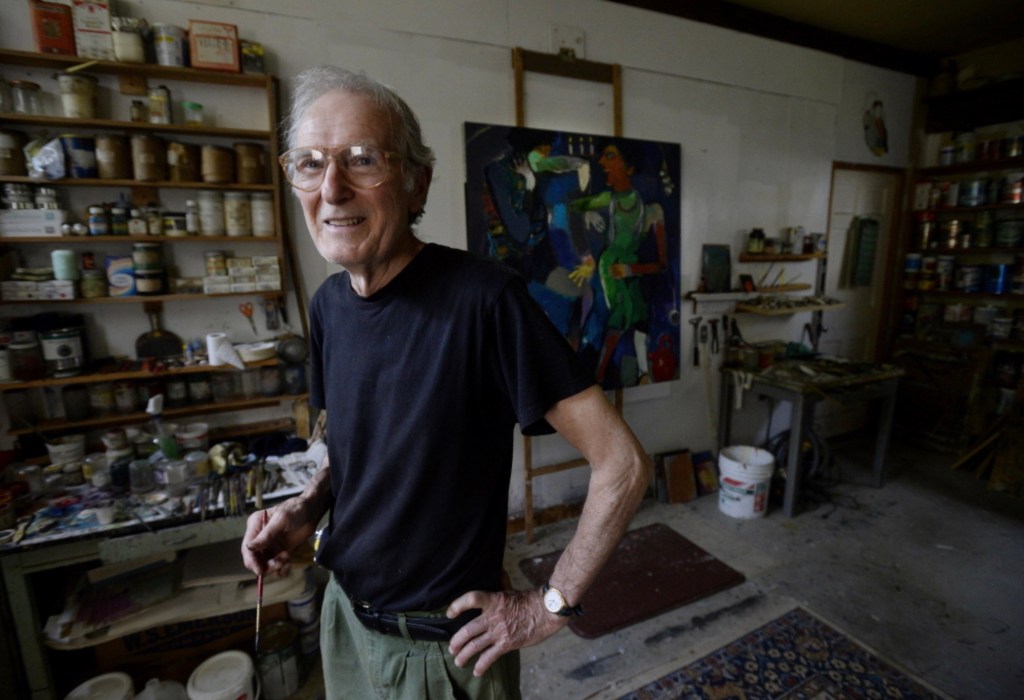
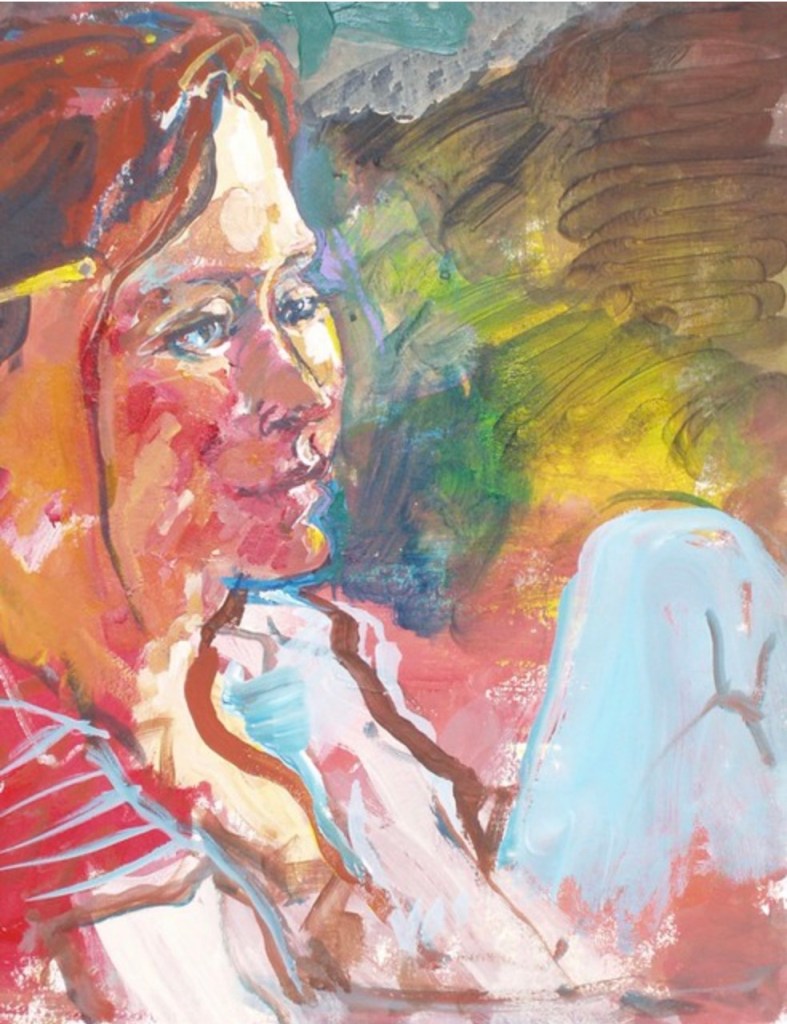
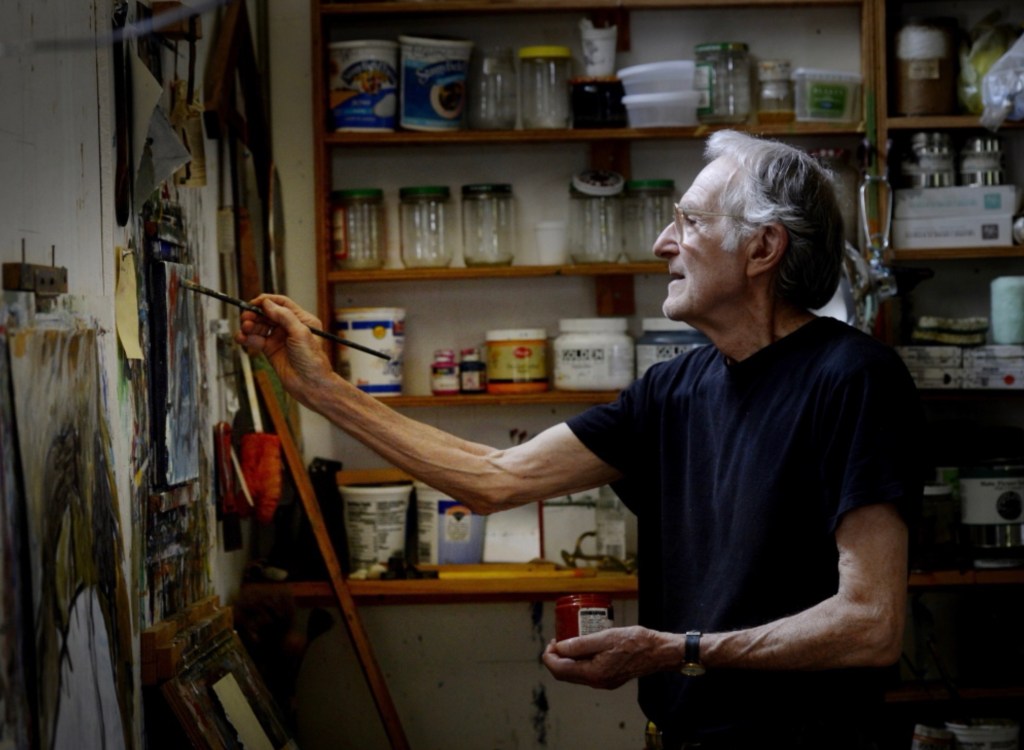
Lethem’s family is the book’s anchor. The title essay looks at Edward Dahlberg, literature’s biggest misanthrope (he makes William H. Gass look tame by comparison; he also looks exactly like how I thought he would, based on the photo in the link) through the lens of Lethem’s aunt, who had both the misfortune and luck to be in his creative writing class in Kansas City. In “Lives of Bohemians” he gives us look at his father, the painter Richard Brown Lethem (see images below) in form a mini memoir of growing up in Brooklyn in the 70s. But the biggest presence in the book is that of his late mother, Judith Lethem, who died of cancer when he was 14. For a good deal of The Disappointment Artist Judith remains in the background, a key force never quite fully glimpsed, finally leaping forward at the end of the book in absent presence and then receding like the Loch Ness Monster:
“My mother, because of her verbal flair, and her passion for books, was taken or mistaken by her friends as a writer to be. Pregnant at twenty-one, and a mother of three by the time she, that at 32, began to die, she never had much chance. It is impossible to know whether she would’ve made anything of that chance if she had.”
“Her gift to me on my fourteenth birthday, the last while she was alive, was a manual typewriter. The summer after her death when I was fifteen, I wrote a 125-page ‘novel’ with the manual typewriter, mostly on torn-out, blue-lined notebook paper. in that same year I typed poems, of a fragment and impulsive sort. Truthfully, then more resembled song lyrics, since I wasn’t a reader of poems then. I recall one which spoke with my mother and the possibility of her writing. ‘You can’t write when you’re sick in bed,’ was its much-repeated chorus… This poem was on one hand sympathetic. I knew, at least consciously, that my mother’s illness was involuntary. so I offered forgiveness: she couldn’t be blamed for not having written. Yet it was also an admonitory poem— really, admonitory to myself.”
There have been many writers who take up the craft inspired by the success or failure of a family member in that area. In my family, while he was not the reason I took up writing, we had a failed writer of our own: my maternal grandfather, Paul Rusanowsky. A former newspaper man who wrote speeches for the governor of Puerto Rico, worked at the San Juan Star at its height (still unhappy years later that his bit about Kruschev’s shoe got bumped from the front page), produced two lovely daughters in my mother and aunt, but was never able to write the book he dreamed of, about his childhood growing up on a farm in Milford. He did make attempts, and we found some of them after he died.
Beyond Jonathan Lethem’s critical abilities, passionate but measured enthusiasm, and interesting asides (did you know he grew up with and went to the same high school as Lynn Nottage?), what makes The Disappointment Artist not only great criticism, but poignant, is the fact that like the author, I have a Judith Lethem of my own.
Patrick Paul Barrett

 The Size of My View
Leave a comment